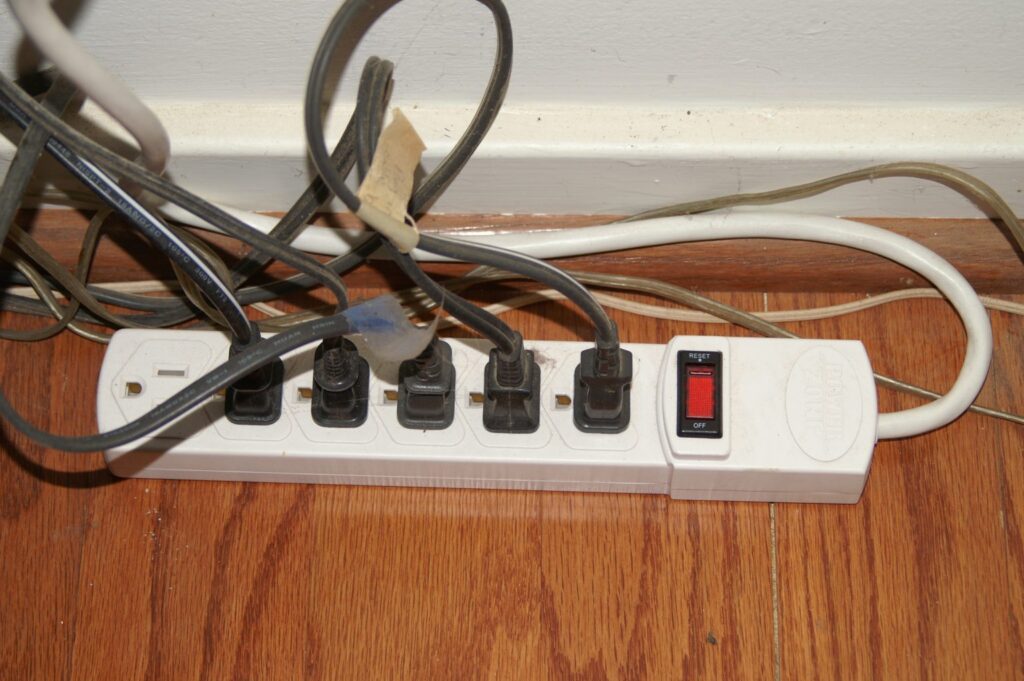
Power strips make life easier. One wall outlet suddenly turns into six, and everything feels more organized. But here’s the problem: power strips are designed for low-draw electronics — not high-wattage appliances. Plug the wrong thing into one, and you risk overheating, tripped breakers, damaged devices, or even an electrical fire.
Electrical experts regularly warn that many house fires start from overloaded circuits and misused extension devices. If something generates heat, has a motor, or pulls a lot of power, it likely doesn’t belong on a power strip. Here are the devices that should always be plugged directly into a wall outlet.
Refrigerators
Refrigerators cycle on and off all day, and that startup surge pulls a significant amount of power. A power strip isn’t built to handle that constant electrical load.
Beyond fire risk, inconsistent power can strain the compressor and shorten the appliance’s lifespan. Refrigerators should always have a dedicated wall outlet.
Microwaves
Microwaves draw a heavy electrical load in short bursts. That quick surge can overwhelm a power strip and create heat buildup. For both safety and performance, microwaves need a direct outlet connection.
Toasters
Toasters are small but powerful. The heating elements inside use a high wattage, and plugging one into a strip increases the risk of overheating or tripping a breaker. This is a plug-it-straight-into-the-wall appliance every time.
Space Heaters
Space heaters are one of the most common causes of winter electrical fires. They draw continuous, high power, and generate intense heat.
Plugging a space heater into a power strip dramatically increases the chance of overheating and fire. Always use a wall outlet, not an extension cord.
Air Conditioners
Window and portable air conditioners are energy-hungry appliances. They require steady, high-capacity power that a strip simply isn’t designed to deliver. Using a wall outlet protects both your wiring and the unit itself.
Washing Machines
Washing machines rely on motors and internal electronics that need a stable electrical supply.
Plugging one into a power strip can cause inconsistent performance and increase safety risks. These appliances should always be plugged directly into a properly rated outlet.
Electric Dryers
Electric dryers use very high wattage and typically require a dedicated circuit. A power strip cannot safely handle that load. This is never an appliance to improvise with.
Dishwashers
Dishwashers combine water, heat, and high power draw not a mix you want running through a power strip. Direct connection ensures safer operation and protects against overheating.
The Worst Things You Can Do to Your Dishwasher
Hair Dryers
Hair dryers may seem harmless, but they use a surprising amount of electricity to generate heat. That heavy drawer can overload a strip quickly, especially in a bathroom setting. Plug directly into a wall outlet only.
Curling Irons and Straighteners
Like hair dryers, styling tools heat up fast and pull substantial power. Plugging them into a strip increases the risk of overheating and electrical failure. They should always be used with a direct outlet.
Coffee Makers
Modern coffee makers, especially those with grinders or programmable features, can draw significant wattage. The heating elements inside them make them unsafe for use with power strips. Use a dedicated outlet to avoid issues.
Electric Kettles
Electric kettles boil water rapidly, which requires a large burst of energy. That sudden demand can overheat a strip. Direct wall connection is the safest choice.
Slow Cookers
Slow cookers use lower wattage than some appliances, but they run for long stretches of time. That sustained load can still cause a strip to heat up over the course of hours of use. A wall outlet is the safer option for long-duration cooking.
25 Lazy Day Slow Cooker Recipes
Electric Ovens and Countertop Ovens
These appliances demand consistent, high electrical output. Power strips aren’t built for that kind of load and can quickly become a fire hazard. Ovens should always be hardwired or plugged directly into the appropriate outlet.