
Recycling is one of the easiest ways to cut down on household waste, but it isn’t always as simple as tossing something into the blue bin. Many everyday items look recyclable but are actually rejected because they’re made from mixed materials, contaminated with food, or can damage sorting equipment.
Placing the wrong items in your recycling bin can contaminate an entire load, making it harder for recycling facilities to recover materials that could have been reused. Knowing what doesn’t belong in the bin can make your recycling efforts much more effective.
Here are 12 common items that often can’t be recycled through curbside programs.

Pizza Boxes
Cardboard is usually recyclable, but pizza boxes are a different story. Once the cardboard is soaked with grease, cheese, or food scraps, it becomes difficult to process. If only part of the box is greasy, tear off the clean portion and recycle that. The greasy section can usually be composted if your community accepts it.
Related: 15 Things Experienced Gardeners Avoid Planting in Raised Beds
Styrofoam Containers
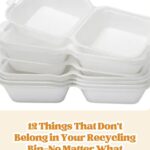
Foam takeout containers and packing materials are accepted by very few curbside recycling programs. They’re lightweight, bulky, and expensive to process, which means they usually end up in the landfill. Some communities offer special drop-off locations, so it’s worth checking before throwing them away.
Related: 10 Things Every Homesteader Should Always Buy at Thrift Stores
Disposable Cups With Plastic or Wax Coatings
Coffee cups and many cold drink cups may look like paper, but most have a thin plastic or wax lining that helps prevent leaks. That coating makes them difficult for standard paper recycling facilities to process, so they usually belong in the trash unless your local program specifically accepts them.
Related: 12 Things Cluttering Your Home That You Can Let Go
Packing Peanuts
Most packing peanuts are made from expanded polystyrene, which isn’t accepted in regular recycling bins. Instead of throwing them away, save them for future shipments or offer them to local shipping stores, moving companies, or neighbors who could use them.
Related: 11 Things Pioneers Could Do That Most People Can’t Anymore
Plastic Wrap and Bubble Wrap
Plastic wrap, bubble wrap, and other plastic films can become tangled in sorting equipment, causing costly shutdowns at recycling facilities. Many grocery stores and retailers have collection bins for clean plastic film, making those drop-off programs the better option.
Plastic Bags
Plastic grocery bags create many of the same problems as plastic wrap. They can clog recycling machinery and slow processing. Rather than placing them in your curbside bin, reuse them around the house or return clean bags to participating grocery stores that collect them for recycling.
Toothpaste Tubes
Most toothpaste tubes are made from layers of plastic, aluminum, and other materials bonded together. Because separating those layers is difficult, they’re rarely accepted through curbside recycling. Some manufacturers offer mail-back recycling programs, but otherwise they belong in the trash once empty.
Rubber Bands
Rubber bands may be small, but they can wrap around sorting equipment and interfere with recycling operations. If they’re still in good condition, keep them for organizing cords, sealing bags, or other household tasks. When they’re worn out, they should go into the trash.
Plastic Shower Curtains and Liners
Most plastic shower liners are made from PVC or similar plastics that standard recycling facilities don’t process. Before replacing them, think about giving the old one a second life. They work well as drop cloths for painting, shelf liners, or covers for outdoor projects.
Coffee Pods
Single-serve coffee pods are often made from a combination of plastic, aluminum, paper filters, and leftover coffee grounds. That mix makes them difficult to recycle through regular curbside programs. Some brands offer mail-back or collection programs, while reusable pods are another option that creates less waste.
Related: 10 Reasons to Use Coffee Grounds as a Secret Ingredient in Your Garden
Medical Waste
Items like needles, syringes, prescription bottles, and other medical waste should never be placed in household recycling bins. Many pharmacies, hospitals, and healthcare providers offer safe disposal programs for these materials, helping protect both sanitation workers and the public.
Hardcover Books
While the paper pages inside a hardcover book are recyclable, the cover often contains cloth, glue, cardboard, and other materials that aren’t accepted with regular paper recycling. If the book is still in good condition, donating it to a library, school, thrift store, or community book exchange is usually a much better option.
Related: Don’t Toss Those Old Books: Here Are 14 Responsible Ways to Get Rid of Them


