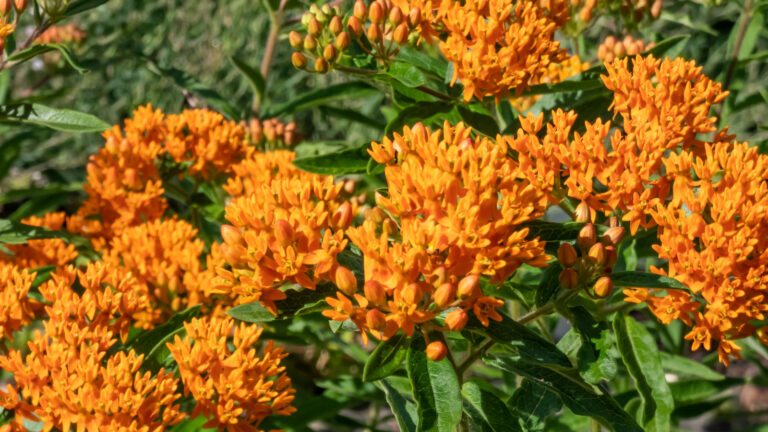
California is home to a wide range of native plants, with thousands of species growing across its different climates. From desert landscapes to breezy coastal areas and mountain regions, these plants are naturally suited to where they grow.
Bringing them into your own garden is a simple way to get that relaxed California feel while working with plants that handle the conditions with ease. Here are 14 native plants you can add to your garden.
1. California Milkweed
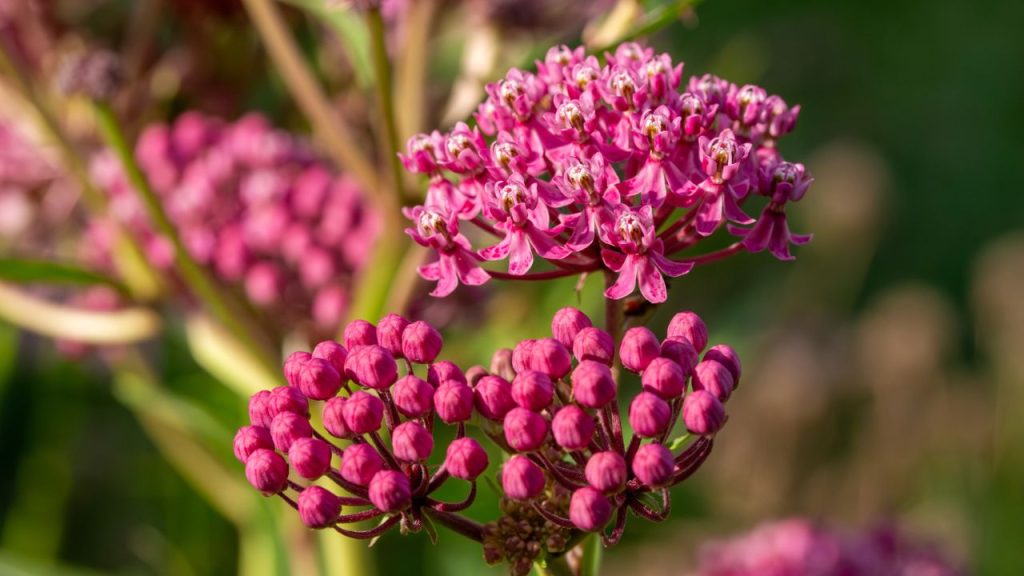
A perennial, drought-resistant flower with thick, white, hairy stems that enhance garden aesthetics. It blooms in summer and spring, producing flowers in shades of lilac, white, bright pink, or
2. Common Yarrow

Known also as nosebleed plant or devil’s nettle, this member of the
3. California Fuchsia

This low-growing, fire-resistant perennial features trumpet-shaped flowers and blooms in summer. It’s known for attracting hummingbirds and prefers full sun and sandy, clay, or serpentine soils. It grows up to 2 feet tall and 3 feet wide. Ideal for zones 8 to 11.
4. Blue-eyed grass

This perennial produces blue to purple flowers. It requires supplemental watering in summer to prevent dormancy. It is low-maintenance, tolerates various soil types, and prefers full sunlight to partial shade. It reaches up to 2 feet, 3 inches in height and is suitable for USDA zones 4 to 9.
5. Beardtongue

Also known as Penstemon, this plant produces showy, long-lasting flowers with a distinctive pollen-free stamen. It thrives in poor, rocky soils with good drainage and full sun and requires weekly watering in summer. It can grow up to 4 feet high and USDA hardiness zones range between 3 and 9.
6. California Poppy

This brightly colored perennial flower is loved for its orange, yellow, and golden blossoms. It is low-maintenance and does not require fertilizer application. It is drought-tolerant, prefers exposure to full sunlight and well-draining sand soils, and matures up to 18 inches tall and 24 inches wide. USDA hardiness zones range from 8 to 10.
7. Island Alum Root

Also known as Jill-of-the-roots, it has tiny pink flowers that usually bloom in spring. It prefers exposure to full sunlight, has low maintenance needs and well-draining sandy soils. It is a perennial flower that grows up to 2 feet tall and requires infrequent watering unless in summer. Zones 8 to 11.
8. Salvia

Salvia is highly tolerant to drought and heat. It produces narrow flower spikes in shades of pink, red, white, blue, and purple. It attracts insect pollinators to your garden and does well in hot and dry climates. It thrives in full sun and well-draining and slightly acidic soils. It can mature up to 5 feet tall. Zones 7 to 11.
9. Mountain Violet

Despite its name, it produces bright yellow flowers in spring. This drought-tolerant perennial does well under full sun and in sandy or silt soils. It grows up to 12 inches tall in USDA zones 6 to 9.
10. Baby Blue Eyes

Baby Blue Eyes is a low-growing, blue-flowered plant that spreads and has succulent stems. It is drought-resistant, prefers full sun, and grows in sandy or loam soils. It reaches up to 6 inches tall and 12 inches wide, suitable for USDA zones 7 to 10.
11. Ceanothus prostratus

An evergreen ground cover with a purple-blue hue, this perennial prefers full sunlight and moderate watering, increasing slightly in summer. It thrives in well-drained loam or sandy soils, growing up to 6 inches high and 8 inches wide, and is suitable for USDA zones 6 to 9.
12. Mountain Mint

Also called Sierra mint, it is the only Pycnanthemum species native to California. It grows rampantly and, if not contained well, can die back to the soil surface in winter. It prefers partial shade, moistened soils that are well-draining, and matures up to 3 feet tall and wide. USDA hardiness zones range from 6 to 9.
13. Dutchman’s Pipe Vine

This vine is known for its unpleasant scent, which attracts insects. It tolerates most soil types, prefers partial shade, and requires minimal watering. It can grow over 20 feet long and is suitable for USDA zones 7 to 10.
14. Common Manzanita

An evergreen shrub with gnarled branches and delicate white flowers, it is adaptable to various soils and requires infrequent watering. It thrives in full sunlight and can grow up to 20 feet tall and 10 feet wide, suitable for USDA zones 8 to 10.