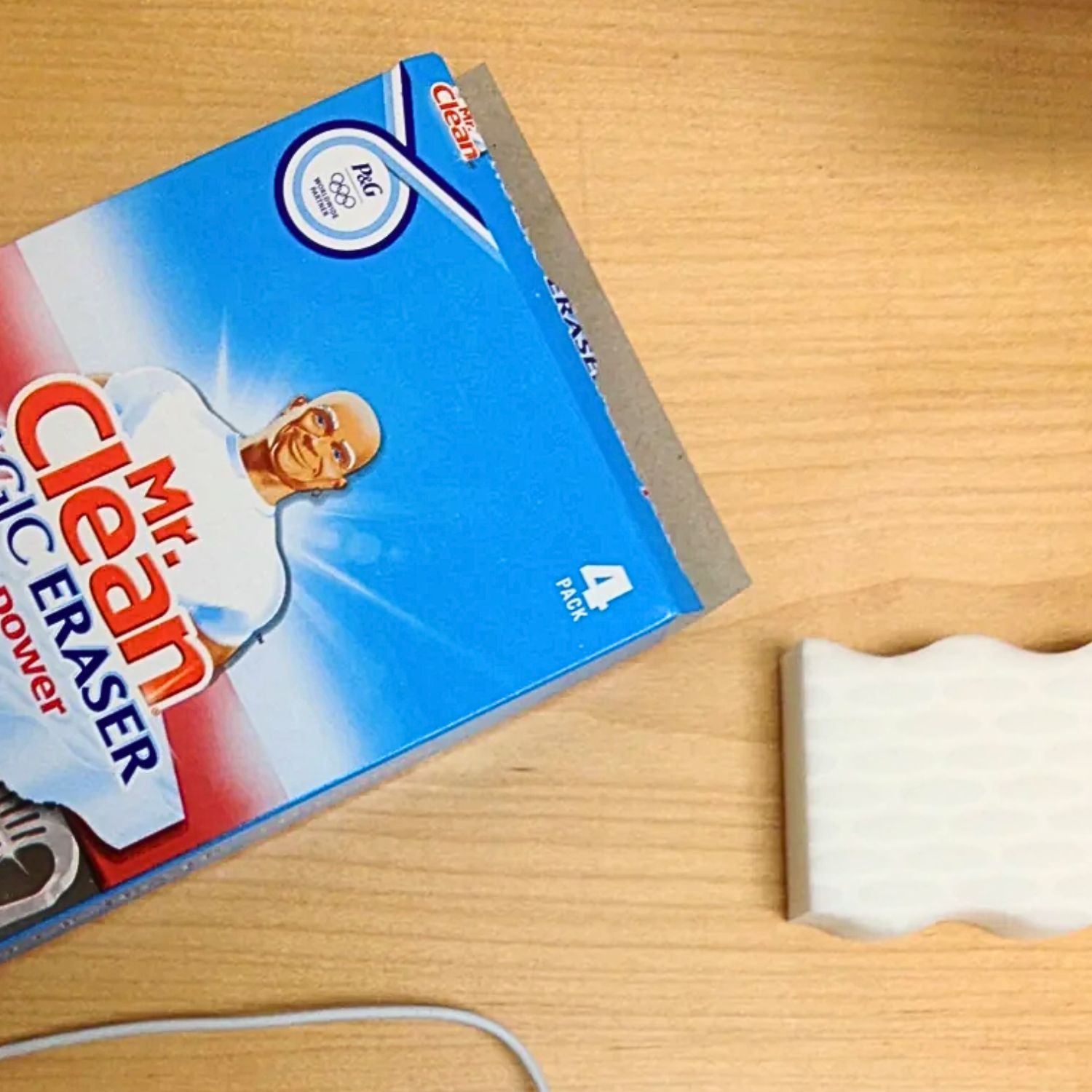
I love a cleaning product that actually does what it promises, and Magic Erasers are one of those things I always like to keep around. They’re great for tackling stubborn scuff marks, grime, and those random stains that don’t seem to budge with a regular sponge.
But I’ve also learned that just because a Mr. Clean Magic Eraser can remove a mark doesn’t mean it’s the right product for the job.
Magic Erasers are made from melamine foam, which works a lot like very fine sandpaper. That slightly abrasive texture is what makes them so effective, but it’s also why they can scratch surfaces, dull finishes, and remove protective coatings.
And sometimes, you don’t realize you’ve damaged something until the surface dries and you’re left staring at a dull patch that wasn’t there before.
Before you start scrubbing, here are 10 things I’d think twice about cleaning with a Magic Eraser.
1. Wood Furniture and Floors
That stubborn mark on your dining table or wood cabinet might look like the perfect job for a Magic Eraser, but you could end up removing the protective finish along with the stain. Once that happens, you’re left with a dull or discolored patch that’s much harder to fix than the original mess.
For finished wood, I’d stick with a soft cloth and a gentle product like Murphy’s Wood Cleaner, following the care instructions for the finish.
2. Stainless Steel Appliances
I can understand why someone would reach for a Magic Eraser to remove fingerprints or stubborn grease from a stainless steel refrigerator. Unfortunately, the abrasive foam can leave fine scratches or dull spots, especially on appliances with a brushed or coated finish.
A soft microfiber cloth and a stainless steel cleaner made for your appliance are much better options.
3. Glossy Cabinets and Other Shiny Surfaces
There’s something especially frustrating about trying to remove one little mark and ending up with a dull spot that’s twice as noticeable. That’s exactly what can happen when you use a Magic Eraser on glossy cabinets, lacquered furniture, or other polished surfaces.
The foam can gradually wear away the shine, so I’d use a microfiber cloth and a cleaner recommended for that particular finish instead.
4. Leather and Suede
Whether it’s a leather couch, a favorite handbag, or a pair of shoes, a Magic Eraser isn’t something I’d use to tackle stains. The abrasive material can strip away color, damage protective finishes, or change the texture of suede.
These materials need cleaners specifically designed for them, and I’d always test any new product somewhere that isn’t easily visible.
5. Phones, Televisions, and Computer Screens
Fingerprints on a television or phone screen can be annoying, but a Magic Eraser could turn a simple cleaning job into an expensive mistake. Many electronic screens have special coatings that can be damaged by abrasive scrubbing, leaving cloudy spots or uneven areas.
A clean microfiber cloth is usually enough for fingerprints, and any additional cleaning should follow the device manufacturer’s instructions.
Related: 14 Family Heirlooms That Are Often Thrown Away Without Realizing Their Value
6. Nonstick Pots and Pans
If you’ve ever had food stick to a supposedly nonstick pan, you know how tempting it can be to grab something stronger and start scrubbing. But a Magic Eraser can wear down the coating that makes the pan nonstick in the first place, shortening its useful life.
I’d soak the pan in warm, soapy water and use a soft sponge rather than risk damaging cookware that could be expensive to replace.
Related: Why Preppers Swear by Epsom Salt for Their Survival Stockpile
7. Your Car’s Paint and Interior
Those stubborn scuff marks on your car might seem like an easy fix with a Magic Eraser, but I wouldn’t take that chance. The foam can scratch or dull the clear coat on exterior paint and may damage certain plastics, vinyl, and leather inside the vehicle.
Use an automotive cleaning product that’s made for the specific surface you’re working on, especially when dealing with painted or coated materials.
8. Glass and Mirrors
A Magic Eraser might seem harmless on glass, but I wouldn’t use one on my mirrors or windows without checking the manufacturer’s recommendations. Some glass surfaces have special coatings, films, or treatments that abrasive cleaning can damage, and rubbing trapped grit across the surface can also cause scratches.
For everyday cleaning, a microfiber cloth and a gentle glass cleaner are usually all you need.
9. Painted Walls
This one might surprise you because removing scuff marks from walls is one of the most popular uses for Magic Erasers. They can work, but they can also remove paint or leave behind a lighter, shinier patch, particularly on flat and matte finishes.
I’d start with a damp microfiber cloth and a little mild soap, saving the Magic Eraser as a last resort after testing it in a hidden spot.
10. Your Skin
It might sound strange, but some people use Magic Erasers to remove stubborn stains from their hands or feet. Please don’t do this, because the same abrasive texture that removes grime from household surfaces can also irritate your skin and cause small abrasions.
Stick with soap and water or a skin-safe cleanser, and consider wearing gloves when using a Magic Eraser for household cleaning.