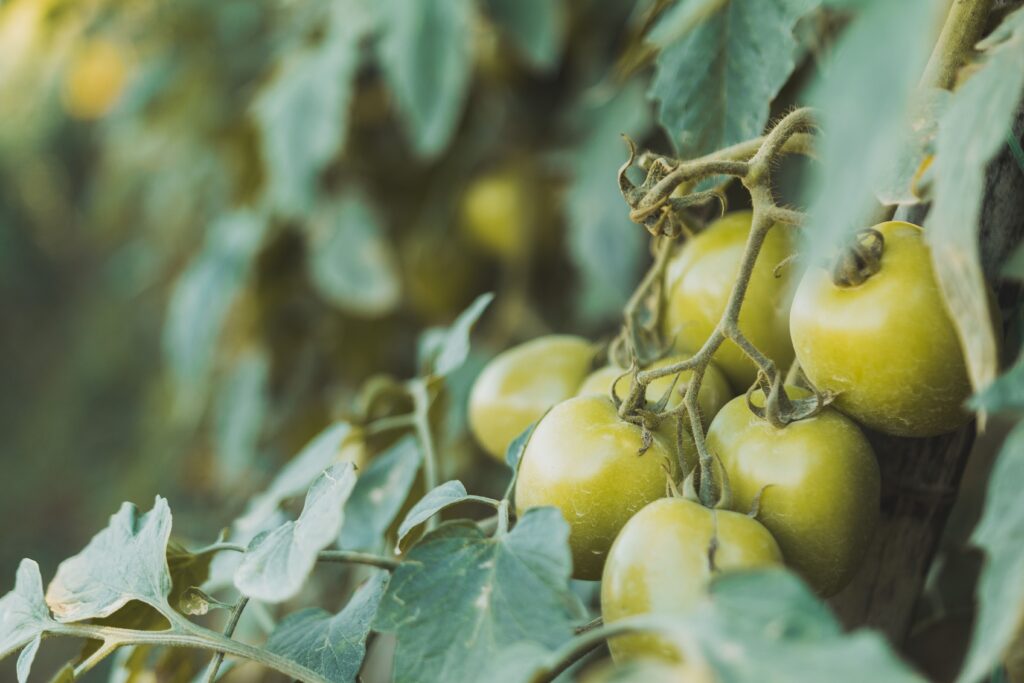
Few things are more satisfying than picking a ripe tomato straight from your garden. After weeks of watering and caring for your plants, it can be frustrating to see the fruit stay green long after you expected it to turn red.
Tomatoes often take six to eight weeks after fruit forms to ripen, and some varieties take longer. Temperature, sunlight, plant health, and growing conditions can all affect how quickly the fruit changes color, so here are 14 things to check if your tomatoes seem stuck.
1. Overcrowding
Tomato plants that are too close together compete for sunlight, water, and nutrients, and dense foliage can limit airflow. Give each plant enough room for its variety, and remove nearby weeds so your tomatoes have space to grow.
Related: 10 Reasons to Grow a Wildflower Garden
2. Poor Soil Nutrition
Tomatoes need a steady supply of nutrients to support healthy growth and fruit production, and poor soil conditions can leave plants struggling. Test your soil before adding fertilizer, since too much fertilizer can cause problems, and so can too little.
3. Extreme Temperatures
Tomatoes tend to ripen best when temperatures stay around 68°F to 77°F, while temperatures above 85°F can slow the production of the pigments that turn fruit red. During prolonged heat, be patient and keep plants watered, as cooler weather often allows ripening to pick up again.
Related: 12 Reasons More People Are Raising Backyard Chickens
4. Too Much Direct Sun and Heat
Tomato plants need plenty of sunlight, but fruit exposed to intense heat can develop sunscald, leaving pale or whitish patches on the skin. Keep the plant’s healthy foliage in place to shade the fruit, and consider temporary shade cloth during extreme heat.
5. Not Enough Sunlight
Tomatoes growing in heavy shade may develop more slowly and take longer to produce ripe fruit. Choose a spot that gets about six to eight hours of direct sunlight each day, and trim back nearby growth that casts too much shade.
6. Too Much Nitrogen
High-nitrogen fertilizer can encourage lush leaves and stems at the expense of flowers and fruit production, especially when plants receive more than they need. Use a fertilizer suited to tomatoes and follow its label rather than adding extra nitrogen in hopes of speeding up growth.
Related: 15 Reasons Why Your Seeds Aren’t Starting
7. The Tomato Variety You’re Growing
Some tomato varieties ripen sooner than others, and small cherry tomatoes often mature before large beefsteak varieties. Check the seed packet or plant label for the expected days to maturity to see whether your fruit is actually running late.
8. Poor Pollination
Poor pollination usually affects whether flowers develop into fruit, rather than how quickly an existing tomato turns red. If flowers keep dropping without producing tomatoes, gently shake the flowering stems to help release pollen, and check whether high temperatures are interfering with fruit set.
9. A Climate That Doesn’t Suit Your Variety
Tomatoes that need a long, warm growing season may struggle in areas where summer is short or cool weather arrives early. Choose varieties suited to your local growing season, and pick mature green tomatoes before a hard freeze so you can try ripening them indoors.
10. Disease or Pest Damage
Diseases that destroy foliage and pests that damage stems or fruit can interfere with healthy tomato growth and leave fruit exposed to sunscald. Inspect plants regularly, remove diseased material as appropriate, and deal with pest problems early using methods suited to the specific issue.
Related: 11 Reasons to Start Saving Eggshells for Your Garden
11. Too Many Tomatoes on One Plant
A plant carrying lots of fruit may take time to bring every tomato to maturity, especially late in the growing season. Near the end of the season, removing new flowers and tiny fruit that won’t have time to mature can help the plant focus on its existing crop.
12. Poor Pruning or Too Much Foliage
Dense growth can make plants harder to inspect and may reduce airflow, while removing too many leaves can expose fruit to scorching sun. Prune selectively based on the tomato variety you’re growing, and avoid stripping away healthy foliage just to let more sunlight reach the fruit.
13. Overwatering or Inconsistent Moisture
Tomatoes need steady soil moisture; waterlogged soil can damage roots, while repeated dry spells can stress the plant and contribute to fruit problems. Water deeply when needed, use mulch to retain moisture, and check the soil before watering again instead of following a rigid schedule.
14. Blossom End Rot
Blossom end rot appears as a dark, sunken patch on the bottom of a tomato and is linked to poor calcium delivery to developing fruit, often because soil moisture has been inconsistent. Remove badly affected fruit, keep the soil evenly moist, and avoid excessive nitrogen fertilizer; add calcium only after checking whether the soil needs it.