We’ve all been there. You reach into the pantry to grab a few potatoes for dinner, only to discover they’ve started growing little sprouts. Maybe there’s just one tiny shoot, or perhaps they’ve been sitting there long enough to look like they’re growing a whole new plant.
Sprouting is a natural part of a potato’s life cycle, but it can also signal that the potato is no longer safe to eat.
The important thing is knowing what to look for. A potato with a few small sprouts is different from one that’s covered in long shoots, turning green, or starting to shrivel. Here’s how to tell the difference and what you should know before cooking with sprouted potatoes.
Why do potatoes start sprouting?
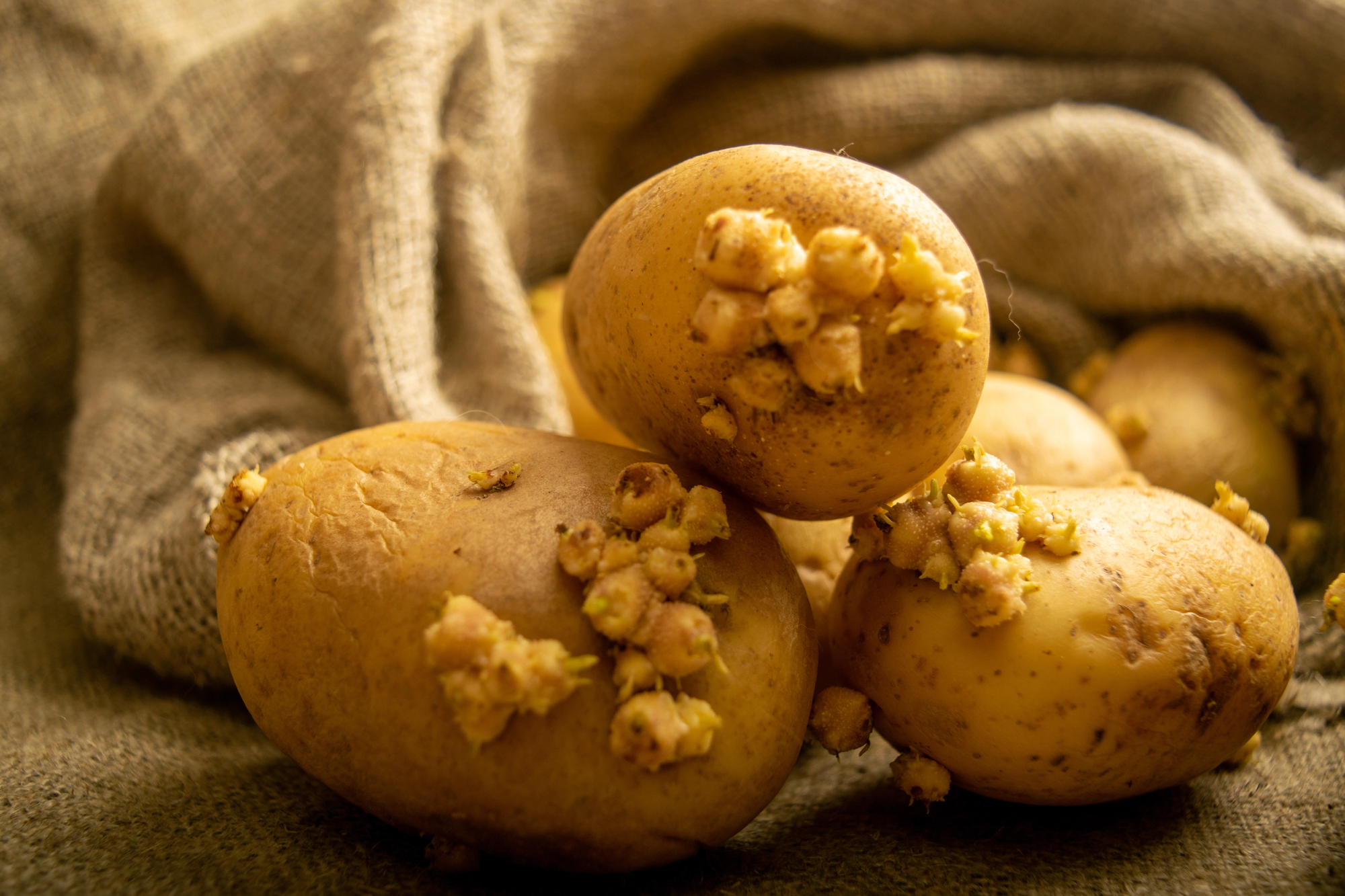
Potatoes might look like ordinary vegetables, but they’re actually tubers that store energy for growing new plants. Those little indentations on their skin, often called eyes, are where new shoots can develop.
When a potato has sat around long enough, it may start using its stored energy to grow. Small bumps eventually turn into shoots that can be white, green, pink, or purple, depending on the potato and growing conditions.
It’s a completely natural process. In fact, gardeners intentionally allow seed potatoes to sprout before planting them. But when you’re planning to eat those potatoes instead of growing them, the sprouts deserve a little more attention.
Related: 24 Potato Recipes You’ll Never Get Tired Of
What causes potatoes to sprout in storage?
The way you store potatoes has a lot to do with how quickly they begin sprouting. Warm temperatures, light exposure, and poor storage conditions can encourage potatoes to come out of dormancy earlier than expected.
In your kitchen, several factors can make sprouting more likely:
- Warm temperatures: Potatoes stored in a warm kitchen or near appliances may begin sprouting sooner than those kept somewhere cool.
- Exposure to light: Light can encourage changes in potatoes, including greening of the skin. Green coloring is especially important to watch for because it can be linked to higher levels of natural toxins.
- Moisture and poor ventilation: Damp storage conditions can encourage spoilage and make potatoes deteriorate faster.
- Time: Even potatoes stored under reasonably good conditions won’t stay dormant forever. Eventually, they may begin sprouting as they age.
That’s why a bag of potatoes forgotten in the back of a cupboard can look very different a few weeks later.
Can you still eat potatoes that have started sprouting?
This is where you need to be careful. Potatoes naturally contain compounds called glycoalkaloids, including solanine and chaconine. These substances help protect the plant, but consuming too much can make people sick.
A potato that is still firm, has only a few tiny sprouts, and shows no signs of greening or spoilage may be usable after you thoroughly remove the sprouts and surrounding eyes. However, removing sprouts doesn’t guarantee that a potato is safe, particularly if it has significant greening or other signs of deterioration.
If the potato has extensive sprouting, green areas, or a noticeably shriveled appearance, throwing it away is the safer choice.
Warning signs that a sprouted potato should be thrown away
Not every sprouted potato looks the same, and some warning signs are easier to spot than others. Before deciding whether to cook one, check for these changes.
- Green skin or flesh: Green coloring indicates light exposure and can signal higher glycoalkaloid levels. Avoid eating potatoes with significant greening.
- Long or numerous sprouts: A potato covered in developed shoots is further along in its growth cycle. It’s best to discard heavily sprouted potatoes rather than try to salvage them.
- Soft or shriveled texture: Potatoes naturally lose moisture as they age, but excessive softness, wrinkling, or shriveling suggests they’re well past their best.
- Mold, leaking, or rotten areas: These are clear signs of spoilage. Discard potatoes that are moldy, slimy, or rotting.
- A bitter taste: An unusually bitter taste can warn of elevated glycoalkaloids. Stop eating the potato rather than trying to cook away the bitterness.
Eating potatoes with excessive glycoalkaloids can cause nausea, vomiting, diarrhea, and abdominal pain. More serious poisoning can occur, although it is uncommon.
When a potato shows several of these warning signs, saving a few cents isn’t worth the potential risk.
How to keep potatoes from sprouting too quickly
If your potatoes sprout before you can use them, your storage location may be part of the problem.
Potatoes generally keep best in a cool, dark, dry, and well-ventilated area. A pantry away from the stove, a cool basement, or a suitable root cellar can help slow sprouting and prevent premature spoilage.
Avoid leaving potatoes in direct sunlight, on warm countertops, or in tightly sealed plastic bags where moisture can build up. A breathable container or ventilated bag is usually a better option.
It’s also worth checking your potatoes regularly. Remove any that are rotting so they don’t affect the rest, and try to use older potatoes before opening a fresh bag.
Should you throw away every potato that sprouts?
Finding a few sprouts doesn’t automatically mean an entire bag of potatoes belongs in the trash. But sprouting is a reason to inspect each potato carefully rather than assume it’s safe to cook.
A firm potato with minimal sprouting and no greening may still be usable with proper trimming. Discard potatoes that are heavily sprouted, green, soft, or deteriorating.
And if you find yourself constantly throwing away sprouted potatoes, consider buying smaller quantities or changing where you store them. A few simple adjustments can help your potatoes last longer and reduce unnecessary food waste.
I kept the article focused on the question readers are most likely asking: Can I still eat these potatoes, and what warning signs should I look for? I also retained the two relevant sources and removed the repeated explanations of why potatoes sprout.