
A large garden is a rare canvas, and water is one of the few elements that can hold it together visually. But the wrong fountain style doesn’t just look underwhelming – it disappears into the space or clashes with what you’ve already built around it.
Scale, sightlines, and garden character all shape which outdoor fountain style works best for large gardens. The five styles below break down the strongest contenders, from stately tiered designs to naturalistic basin installations, so you can choose the option that fits rather than just fills the space.
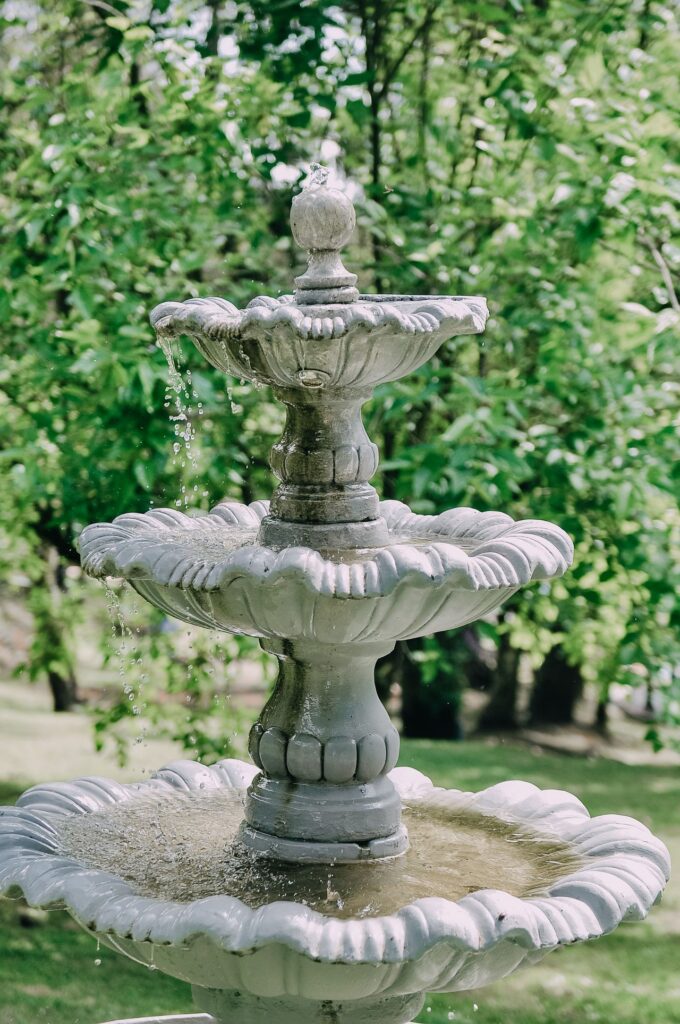
Tiered Fountains
Tiered designs are among the most sought-after decorative outdoor fountains for large formal gardens, and for a reason: their vertical layers hold visual weight across a wide expanse of lawn or hardscape in a way a single-basin fountain can’t.
A two- or three-tier fountain placed at a garden’s central axis draws the eye immediately and creates a clear focal point. The sound carries well, too. In a large outdoor space, that gentle cascading sound reaches across the garden without needing amplification.
The main consideration is base clearance. A tiered fountain needs open space around it – roughly 8 to 15 feet of clear ground on all sides – so it reads as a centerpiece rather than an obstacle. Pair it with symmetrical planting on either side to reinforce the formal geometry.
Material matters here. Cast stone and resin weather well across most US climates, but if you’re in a freeze zone, check the manufacturer’s specs for minimum temperature tolerance before buying.
Pond-Style and Basin Fountains
A large garden can support a pond-style fountain in a way a small yard never could. These installations sit low to the ground, with a wide basin that reflects the sky and surrounding greenery, making the garden feel larger rather than more cluttered.
The jet configuration determines the visual character. A single central jet gives you a clean, formal look. Multiple jets arranged in a pattern read as more playful and work well in cottage or naturalistic gardens. Both work at scale.
Pond-style fountains also support additional features. You can add lighting underwater, introduce aquatic plants around the edges, or stock the basin with koi if the depth allows. That flexibility makes them one of the most adaptable options on this list.
Keep in mind that a wide basin requires a level installation surface. If your garden slopes, you’ll need to grade the site or build a flat platform before installation – not a small job, but worth it for how grounded the finished feature looks.
Sculptural and Statuary Fountains
Not every large garden has a formal axis or a flat central clearing. Sculptural fountains solve that problem because they work as standalone art pieces that happen to include water, so placement is far more flexible.
A figurative sculpture – a classical figure, an animal form, an abstract shape – reads clearly from a distance, which matters in a garden measured in acres rather than square feet. You can position it at a path junction, at the end of a vista, or as a corner anchor without needing to restructure the surrounding layout.
RecommendedBest Travel Insurance Plans
Travel safely with comprehensive medical coverage abroad.
The water element is typically modest in these designs: a gentle pour from a figure’s hand or a spill over a sculpted surface. That restraint works in your favor in a naturalistic garden where a dramatic jet would feel out of place.
Stone, bronze, and high-quality resin are the three materials you’ll encounter most. Bronze ages into a patina that many gardeners actually prefer; it gives the piece a lived-in character. Resin holds its color far better and weighs considerably less, making it much easier to position on uneven or difficult ground.
Contemporary Geometric Fountains
If your large garden leans modern – clean lines, structured planting, minimal ornamentation – a geometric fountain is the right answer to which outdoor fountain style works best for large gardens in that aesthetic.
The core challenge is proportion: a modern fountain needs to be larger than you’d initially expect to avoid looking like an afterthought in a wide-open space. A sphere that looks dramatic in a showroom might read as a pebble in a half-acre garden.
Stainless steel and polished concrete are common material choices. Both hold up well outdoors but do require occasional cleaning to maintain their appearance – mineral deposits from hard water build up faster on smooth, reflective surfaces.
And because contemporary designs tend to be simpler in form, lighting becomes especially important. Uplighting a geometric fountain at night turns it into a completely different focal point and extends the value of the investment past daylight hours.
Japanese and Zen-Inspired Fountains
A tsukubai (a traditional Japanese stone basin) or a bamboo spout fountain brings a completely different quality to a large garden. These designs prioritize sound and stillness over visual drama, which makes them ideal for meditation gardens, wooded areas, or any section of a large property meant to feel deliberately quiet.
The water movement is gentle and deliberate. That’s the point. A bamboo pour-over smooth river stones produces a sound that is close to natural rainfall, and in a large shaded garden with mature trees, that quality fits in a way a tiered fountain wouldn’t.
Scale these designs carefully. A single small tsukubai can anchor a quiet corner garden effectively, but if you’re placing one in a large open area, you’ll need a larger basin and potentially multiple water elements grouped together to hold the space visually.
Natural stone – granite, basalt, slate – is the standard material. It weathers in a way that looks intentional rather than neglected, which means lower maintenance over time and a look that actually improves with age.
Conclusion
Picking the right outdoor fountain style for a large garden really comes down to three factors: how formal your layout is, how much visual weight the spot can carry, and what atmosphere you want at ground level. Tiered and pond-style fountains suit formal or symmetrical gardens best. Sculptural and geometric designs offer flexible placement and make a strong visual statement wherever they land. Zen-inspired installations bring a quieter, more contemplative mood to naturalistic or shaded areas. Match the fountain to the garden’s existing logic and you won’t go far wrong.
PartnerCheap Hostels & Airbnbs
Find the best affordable accommodation options across Europe and the USA.
