
First, it was Microsoft Outlook. Then came a nationwide ground stop that disrupted air travel across the United States. Just days later, banking customers experienced difficulties accessing online services and completing financial transactions.
A widespread Microsoft 365 outage affected Outlook and other workplace applications, while JPMorgan Chase confirmed that a software issue disrupted transactions, with ripple effects across other financial institutions. United Airlines also experienced a computer system failure that temporarily disrupted departing flights.
With several major technology disruptions happening practically back-to-back, some Americans are beginning to wonder whether these are isolated incidents or signs of a much bigger problem.
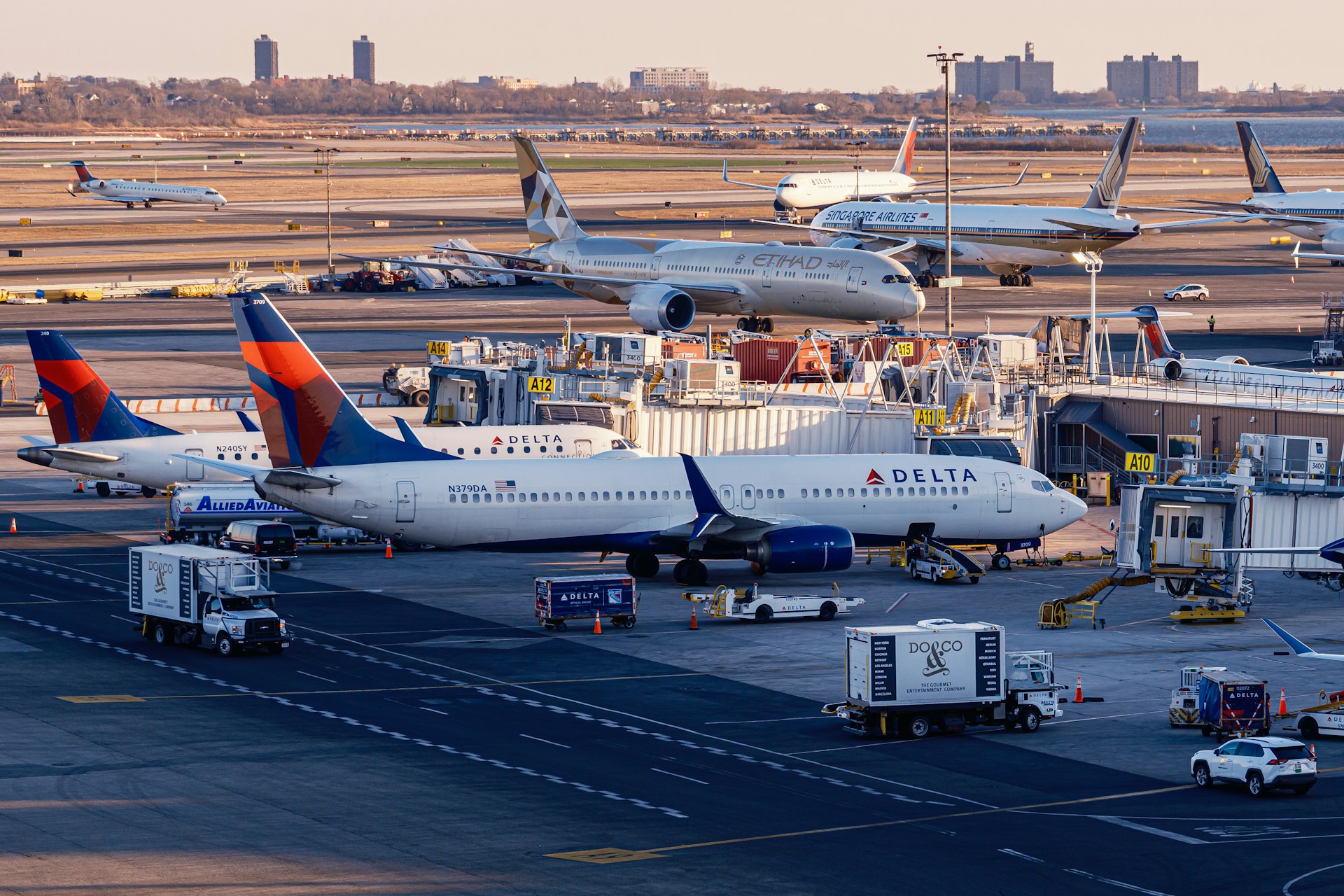
Several Major Technology Disruptions Occurred Within Days of Each Other
The disruptions have affected some of the most important services Americans rely on, from managing their finances and communicating at work to traveling across the country.
In a recent Reddit discussion that attracted thousands of upvotes and more than 1,000 comments, people questioned whether the country could be experiencing some form of cyberwarfare. Others suggested that aging infrastructure, corporate cost-cutting, and the rapid adoption of artificial intelligence could be contributing to the problems.
According to Reuters, companies and federal officials have pointed to separate technical explanations rather than coordinated cyberattacks. Still, the timing of these disruptions has raised some uncomfortable questions about the reliability of the technology we depend on every day.
Some People Are Questioning Whether the Outages Are Connected
The frequency and timing of the incidents have led some Reddit users to speculate about coordinated cyberattacks.
Some questioned how failures affecting such important systems could happen so close together, while others wondered whether the disruptions were exposing vulnerabilities that had previously gone unnoticed. However, not everyone was convinced there was a connection.
“Multiple outages happening close together definitely looks suspicious, but timing alone doesn’t prove they’re connected. I’d be more concerned about how fragile the infrastructure seems either way,” one Reddit user wrote.
Others Believe Years of Underinvestment in Technology Are Catching Up With Us
Several commenters argued that the recent disruptions could be the consequences of years of corporate cost-cutting, outdated technology, understaffed IT departments, and delayed infrastructure improvements.
Many questioned whether companies and government agencies have invested enough in maintaining the systems that millions of people rely on.
One Reddit user summed up the situation with a bit of humor. “At this point, I’m not sure if we’re under cyberattack or if the entire internet is being held together by one exhausted IT guy named Dave.”
The Growing Reliance on Artificial Intelligence Is Also Being Questioned
Artificial intelligence was another recurring topic throughout the discussion. Some commenters wondered whether companies were adopting AI too quickly, reducing experienced staff, and implementing software changes without sufficient human oversight.
“Or just companies pushing out poorly tested AI coding to try and save costs,” wrote one Reddit user. Others suggested that AI could make existing cybersecurity threats more difficult to manage while also introducing new technical challenges.
While these concerns generated considerable discussion, no established evidence shows that AI caused the recent series of outages. Microsoft specifically stated that its service disruption was a technical issue unrelated to cyberattacks or AI agents.
Federal Officials Have Pushed Back on Cyberattack Speculation
The FAA attributed its ground stop to a technical problem involving the installation of networking equipment, while JPMorgan Chase identified a software bug as the source of its transaction-processing issues.
Homeland Security Secretary Markwayne Mullin has also pointed to the challenges of integrating newer technology with aging computer systems, suggesting that similar disruptions could continue as organizations upgrade their infrastructure.
So far, no confirmed evidence links these incidents to a coordinated cyberattack.
The Bigger Concern May Be How Dependent We’ve Become on Technology
One of the more concerning aspects of the discussion was how much of our everyday lives depends on a relatively small number of technology providers.
Businesses rely on cloud-based software to operate, banks depend on interconnected networks to process financial transactions, and hospitals, transportation companies, government agencies, and retailers all use digital systems to perform essential tasks.
“The scary part isn’t even the possibility of cyberwarfare. It’s realizing how much of our daily lives can be disrupted by a handful of systems going offline,” another Reddit user wrote.
Think about how many things you now do digitally that you once did without an internet connection. We pay for groceries with our phones, access our money through banking apps, store important documents online, use digital maps to get around, and rely on email for everything from work to medical appointments.
These conveniences have made everyday life considerably easier, but many of us haven’t maintained alternatives for when these services are temporarily unavailable. Even a relatively short disruption can become a significant inconvenience.
It Doesn’t Take a Cyberattack to Disrupt Everyday Life
Whether a technology outage is caused by a cyberattack, a software error, aging equipment, or a poorly executed system update, the immediate consequences for ordinary households can be surprisingly similar.
Keeping a reasonable amount of cash at home, maintaining physical copies of important documents, writing down emergency contact information, and keeping extra household necessities on hand are practical ways to reduce your dependence on digital services.
You don’t have to believe that something sinister is happening to recognize the vulnerabilities these recent incidents have brought to light.
Perhaps the more important question isn’t whether all these outages are connected, but how well we’d manage if the systems we’ve grown accustomed to relying on suddenly became unavailable.