I’ve owned plenty of cutting boards over the years, and I typically just wash them, let them dry, and put them away until the next time I need one.
But I recently got a beautiful new wooden cutting board from Bevel & Bond, and this one has me paying a little more attention. It’s made from thick end-grain maple, looks beautiful on my kitchen counter, and is something I want to keep in good condition for years. So I’ve been paying a lot more attention to what I should (and shouldn’t) be doing to take care of it.
Thankfully, it doesn’t take much. There are just a few things I’m doing differently to keep the wood from drying out, cracking, or warping.
I Started With a Good Wooden Cutting Board
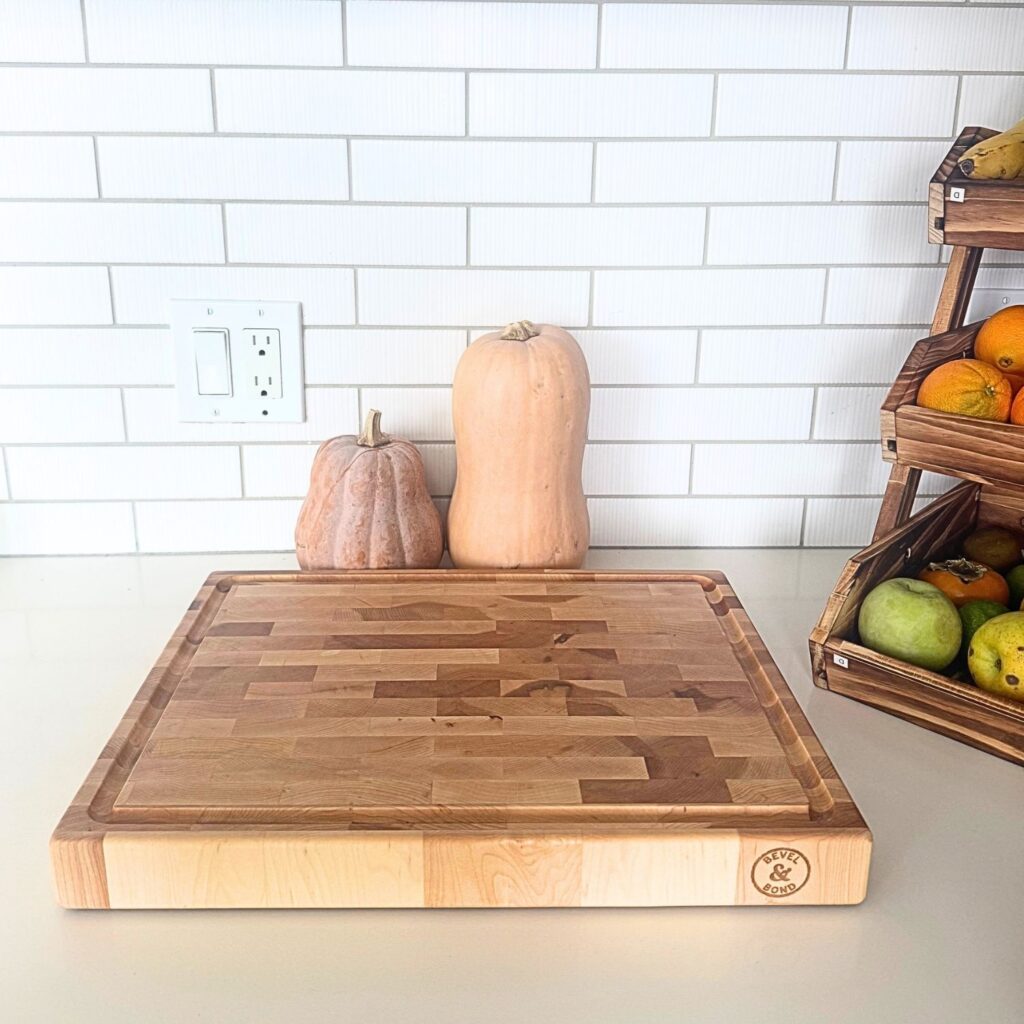
Taking care of a cutting board starts with having one that’s worth taking care of. The Bevel & Bond End-Grain Maple Cutting Board I use is made from hard maple and measures 17 by 13 inches, giving me plenty of room for everyday chopping without taking over the entire counter.
It’s also 1.75 inches thick and weighs about 10 pounds, so it stays put while I chop. I especially like the non-slip feet and juice groove around the edge, two small details that have already made it much more practical for everyday food prep.
I’m Not Putting It in the Dishwasher
This might be obvious to anyone who has owned a good wooden cutting board, but it’s worth repeating: I’m keeping this one far away from the dishwasher. All that prolonged heat and water can be rough on wood and increase the risk of warping or cracking.
Instead, I wash it by hand after using it and avoid leaving it sitting in a sink full of water. It takes an extra minute or two, but since I use a cutting board so often, I’d rather take care of it now than replace it unnecessarily later.
I’m Drying It Right Away
I’m also trying to break my old habit of washing a cutting board and leaving it wet on the counter. Wood naturally reacts to moisture, so leaving one part of the board wet while another dries can contribute to uneven movement over time.
After washing, I wipe off the excess water and allow the board to finish drying with airflow around it. It’s such a small step that there’s really no reason to skip it.
I’m Conditioning the Wood
This is probably the biggest thing I’ve learned about caring for a wooden cutting board. Like other natural wood products, cutting boards need occasional conditioning to keep the wood from drying out.
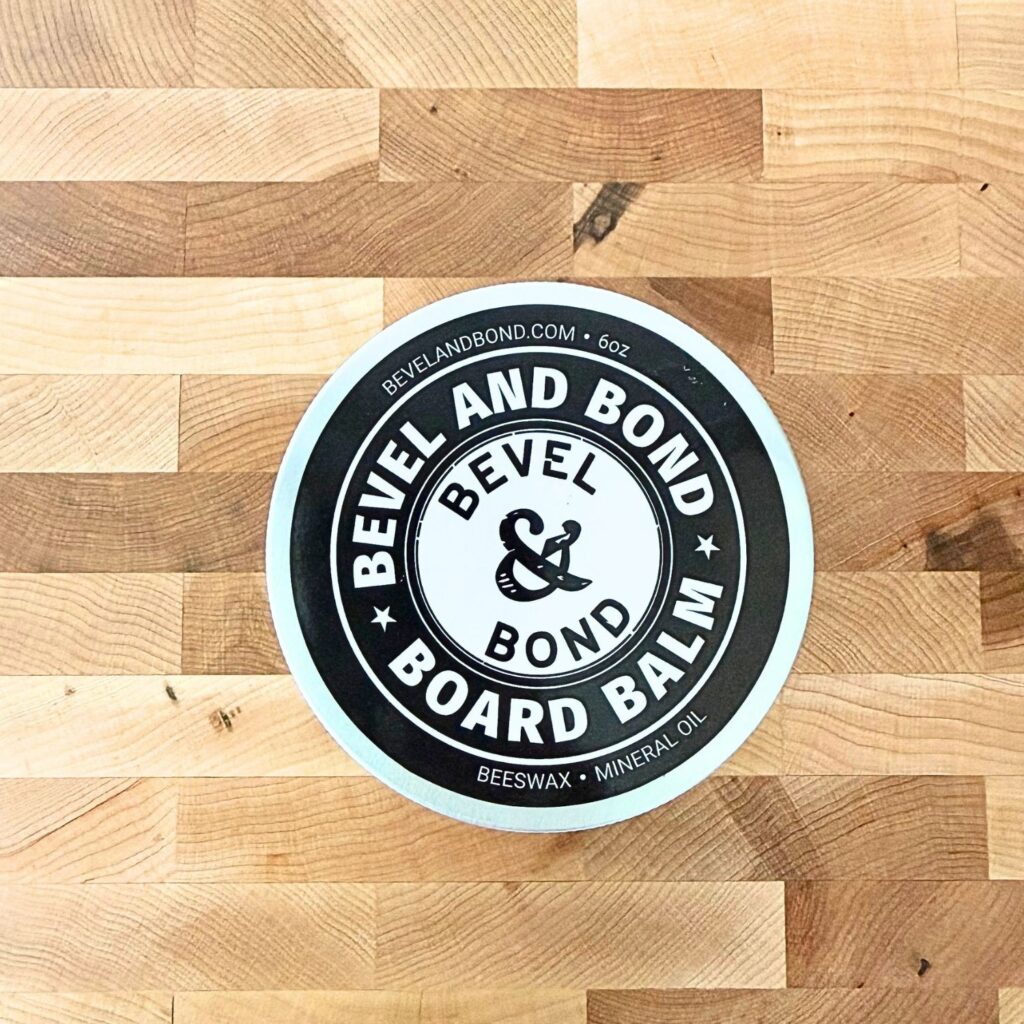
I use Bevel & Bond Board Balm Cutting Board Conditioner, made with food-grade mineral oil and beeswax. The mineral oil helps condition the wood, while the beeswax adds a protective layer that helps repel moisture.
I apply the balm whenever the wood starts to look or feel dry.
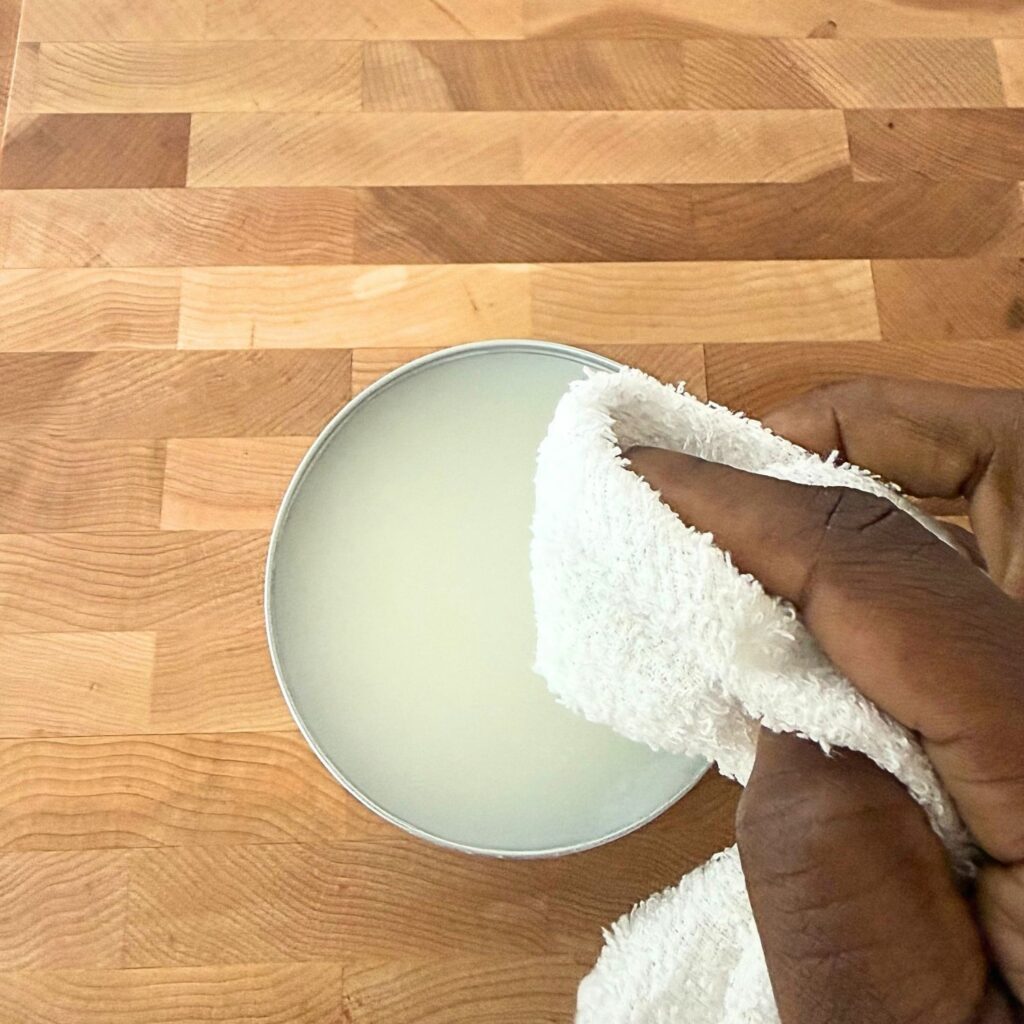
If the wood starts looking pale or dry, feels rougher than usual, or water soaks into the surface instead of beading, those can be signs it’s ready for some attention. Bevel & Bond recommends applying its Board Balm periodically as part of regular maintenance, particularly once the wood starts showing signs that its conditioning is wearing away.
I’m Giving It a Permanent Spot on the Counter
At roughly 10 pounds, this isn’t a cutting board I’m planning to pull out of a cabinet every time I need to chop an onion. I’ve decided it’s much easier to give it a permanent home on the counter where I can actually use it.
And honestly, it’s pretty enough that I don’t mind seeing it. Leaving it out also makes it convenient for everything from chopping vegetables and herbs to slicing bread or prepping dinner.